
Sea Turtles
of South Africa in the spotlight
This is what I know…
I haven’t written a blog post in a while and I know I should write one more often but life just gets in the way. Then there is the question of what to write…we are constantly bombarded with information from all over so whatever I write has to be good enough to get someone’s attention. I figured I would start again with what I know. So this is what I know…
Why Sea Turtles?
I have been fascinated by sea turtles since I was in pigtails. My parents were very active scuba divers and often (before I could dive myself) I would snorkel next to the boat while they were blowing bubbles 30m below me on the reef. My biggest wish was to see a turtle while out there in the ocean, not a dolphin like other kids, but a sea turtle. Sometimes I caught a glimpse when they’d pop up for some air but they would disappear so fast! And if ever you thought sea turtes were slow – think again – they are lightning fast under water. So I was never completely satisfied spotting them like this. Years later when I could finally join my parents on the reef, I was always on the lookout for them and wow, did I get excited when I spotted one! This obsession continued – I eventually decided to conduct my MSc research on the sea turtles of South Africa!
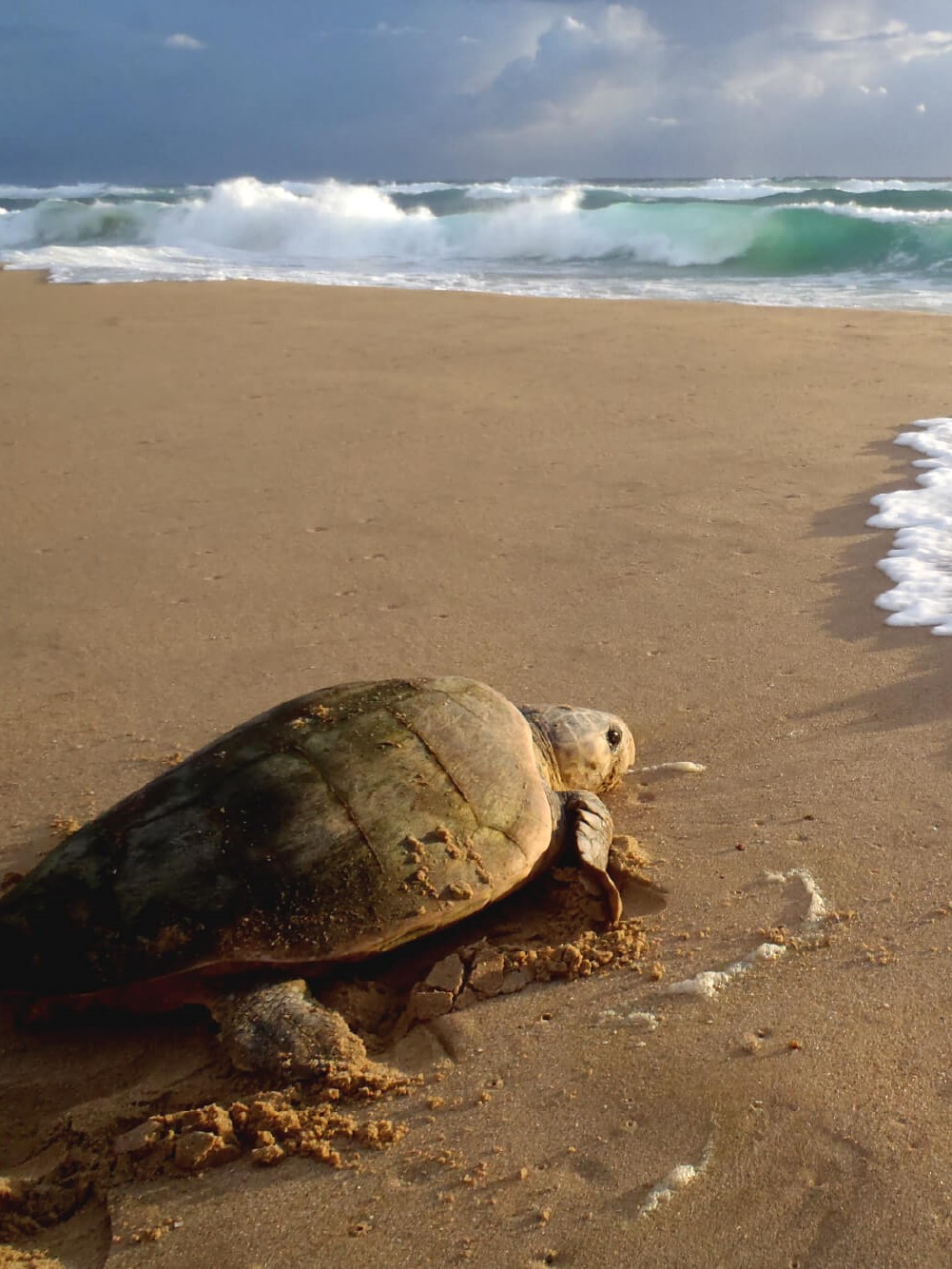
BELOW: A loggerhead female heading back to the ocean after laying her eggs
The Life Cycle of Sea Turtles of South Africa
What makes them so fascinating? There are many aspects of their life cycle which just blows me away. But let’s start at the beginning…
There are 2 species of sea turtles that nest along the north-east coast of South Africa in the iSimangaliso Wetland Park, namely loggerheads and leatherbacks. Female sea turtles come ashore once every 4 years or so to lay their eggs. They nest 4-6 times in a season and lay around 100 eggs per clutch. That’s a lot of eggs! It varies between species but you get the idea. So imagine this massive reptile having to lug herself out the ocean, against the massive waves to crawl up a dune to lay a clutch of eggs…THAT’S DEDICATION – and it is an incredible sight. She very meticulously digs an egg chamber with her hind flippers (they are beautifully shaped like little shovels!). When she is satisfied, she dropps her eggs. Their shells are soft so they don’t get damaged dropping on each other. Once she has completed her mission, she covers the nest with sand and heads back to the waves (quite quickly I might add).
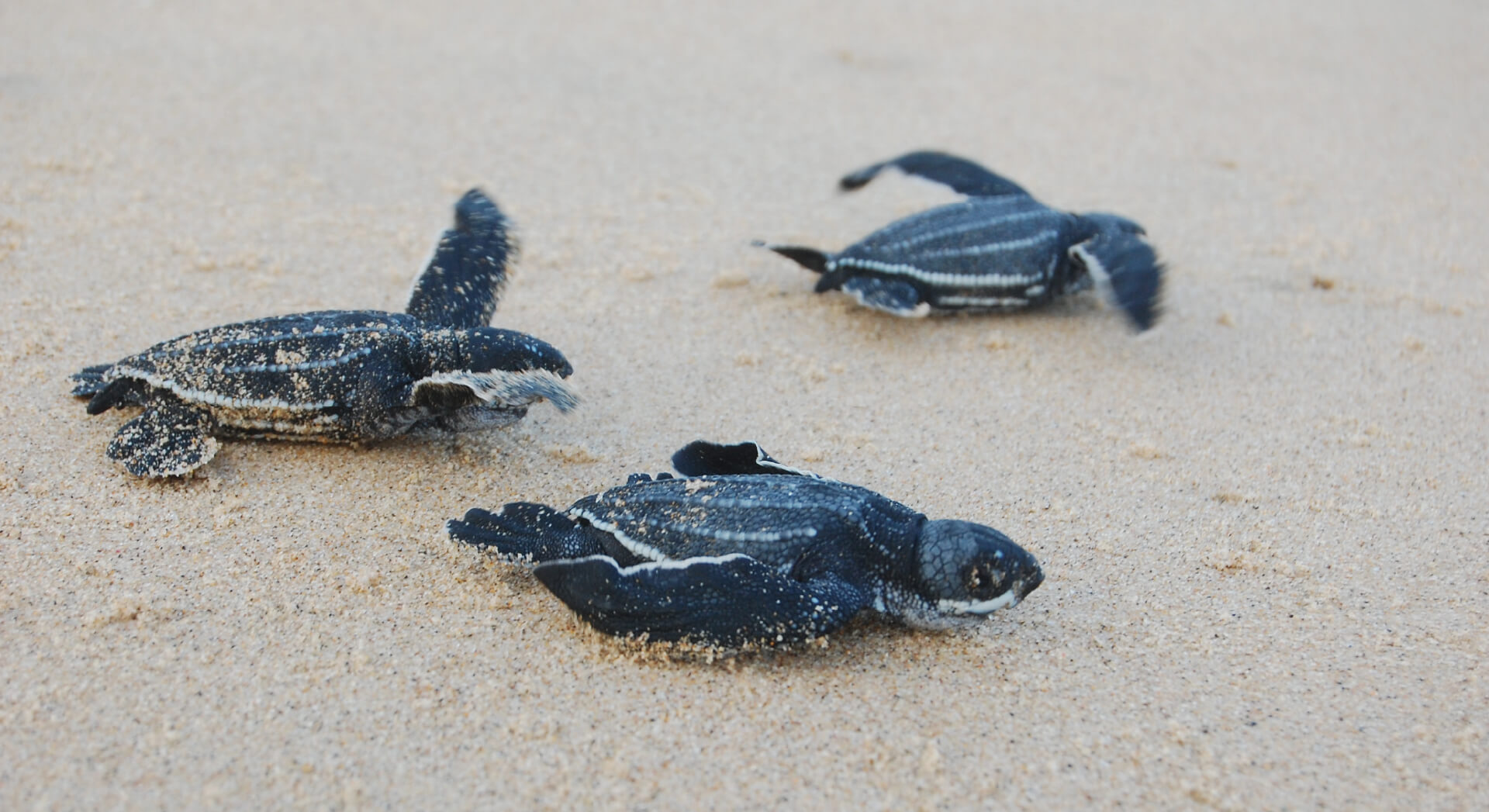
The eggs incubate for 2 months. During this time they grow and develop AND the sex of the turtle is determined. Yes, they don’t have sex chromosomes like we do! Warmer nest temperatures produce females while cooler temperatures produce more males. (You can appreciate how climate change could cause devastation here…). Most of the eggs hatch at the same time. To spread the workload, they move up the channel together as a group when they are ready to make their way out the nest. But, how amazing, they wait just below the sand’s surface for the temperature to cool down before they break the surface and run for the ocean. This makes it less likely that they will dehydrate en route and also, there are fewer predators active in the evenings.
BELOW: Leatherback hatchings en route to the ocean – they have a leathery shell dotted with beautiful white spots on their ridges.
Catching Waves & Currents
Sea turtle hatclings are so tiny – loggerhead hatchlings weigh about 20g and leatherbacks, 40g. So, you can imagine that they are seen by larger fish as a delicious snack! They also have no defence mechanisms – which is why mom lays so many eggs. If they manage to dodge ghost crabs on the beach and predatory fish in the surf, they have swim out to the Agulhas current. Here they cruise along for a couple of years feeding on all sorts of algae, jellyfish, crustaceans and small fish. Loggerheads reach sexual maturity at around 24 years only! In contrast, leatherbacks take about 15 years to start reproducing. Once they are ready – incredibly – they head back to the beaches where they hatched from to breed.
Threats
Besides for natural predators, sea turtle survival is predominantly affected by human activities. Fortunately, their nesting grounds are well protected in South Africa and this has resulted in a steady increase in the population size of both species. However, the leatherback population is recovering much slower. As adults, loggerheads and leatherbacks prefer very different habitats. Loggerheads feed on algae, crustaceans and other reef organisms along the coast whereas leatherbacks prefer jellyfish that live in the deep sea. Scientists believe that the difference in population recovery is due to the immense fishing pressure in the offshore environment. Sea turtles are often caught as bycatch in longline and trawl fisheries. They are reptiles and so they breathe air – even though they can hold their breath for hours, a stressful situation reduces their capacity to do this.
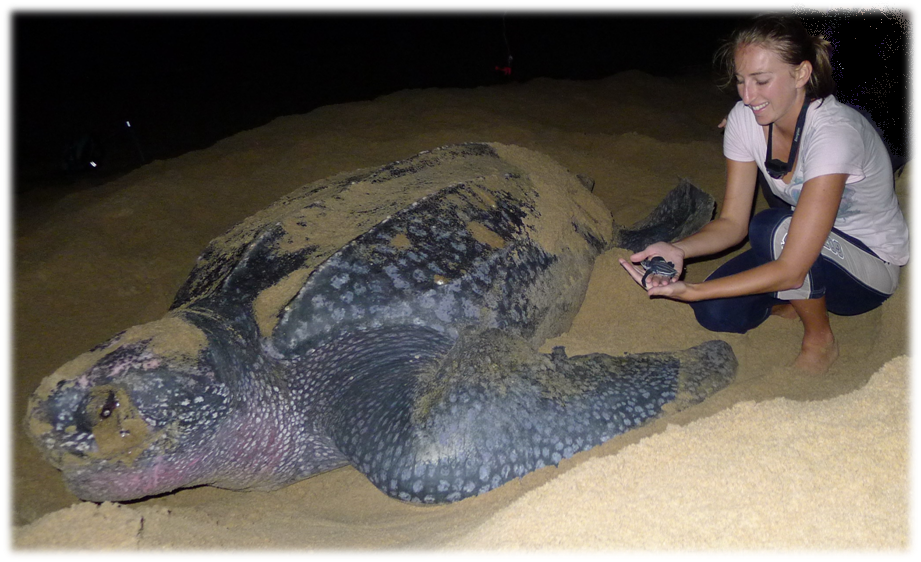
BELOW: A female leatherback and a hatchling to show you the size difference – and that’s me in my happy place!
A Captivating Sea Turtle Experience
If you find the ”turtle story” interesting and would like to have a first-hand experience with these incredible creatures, let me know. I would love to take you to Maputaland to explore the magnificent coastline and patrol the beach in search of nesting sea turtles. They nest from late October to January and then the hatching season begins in December each year. We will be running a tour there soon! Keep your eyes open for details. Pop me a mail if you have any questions – hello@africansoulsafaris.co.za

“Nothing but breathing the air of Africa, and actually walking through it, can communicate the indescribable sensations.“
William Burchell
Recent Comments